← All work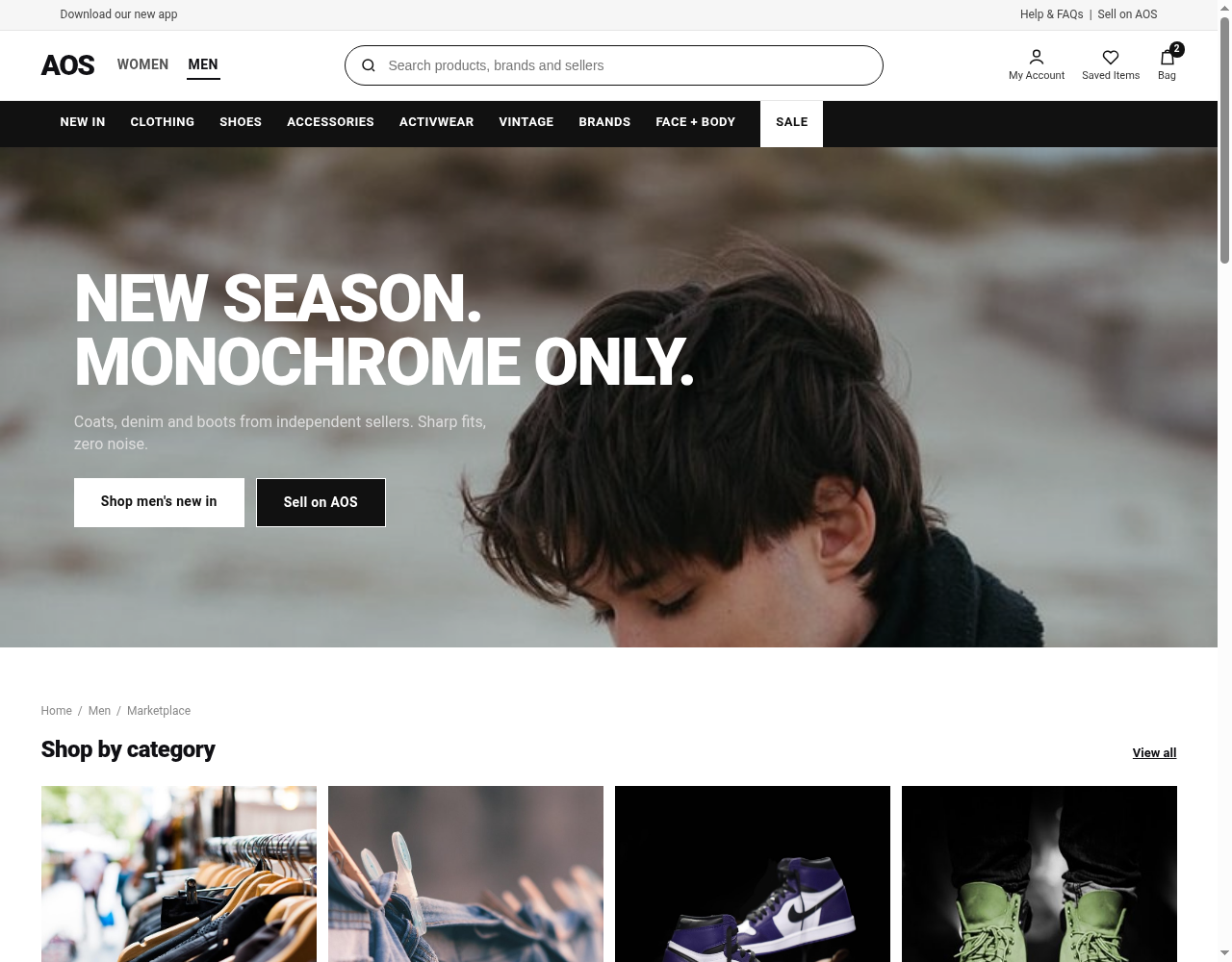
Case study 03 · Marketplace · Seller platform
AOS.
A fashion marketplace where sellers run everything from one screen.
Case study 03 · Marketplace · Seller platform
A fashion marketplace where sellers run everything from one screen.
Buyers get the beautiful storefront. Sellers get spreadsheets, a dashboard they can barely use and a payment date nobody can find. Every marketplace lives or dies on whether sellers can list quickly, keep stock honest and ship on time.
So the brief: build the seller side first. A seller centre where a merchant uploads a product once and sees it live, tracks inventory, moves orders through fulfilment and can always answer one question: when do I get paid?
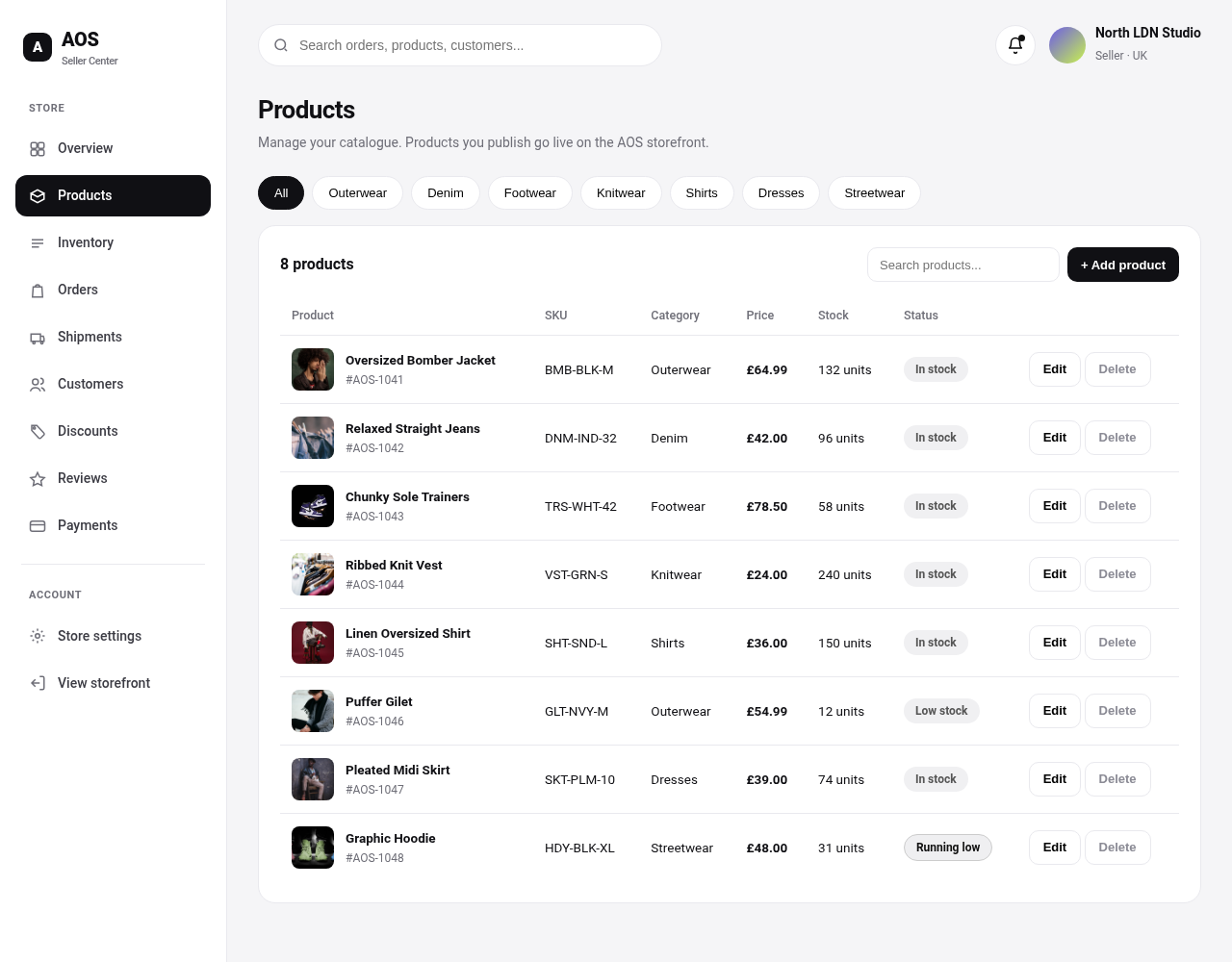
Name, SKU, category, price, stock and images. One save and the product is live on the storefront.
Inventory, product tables and low-stock alerts all read the same source, so the number a seller sees is the number that ships.
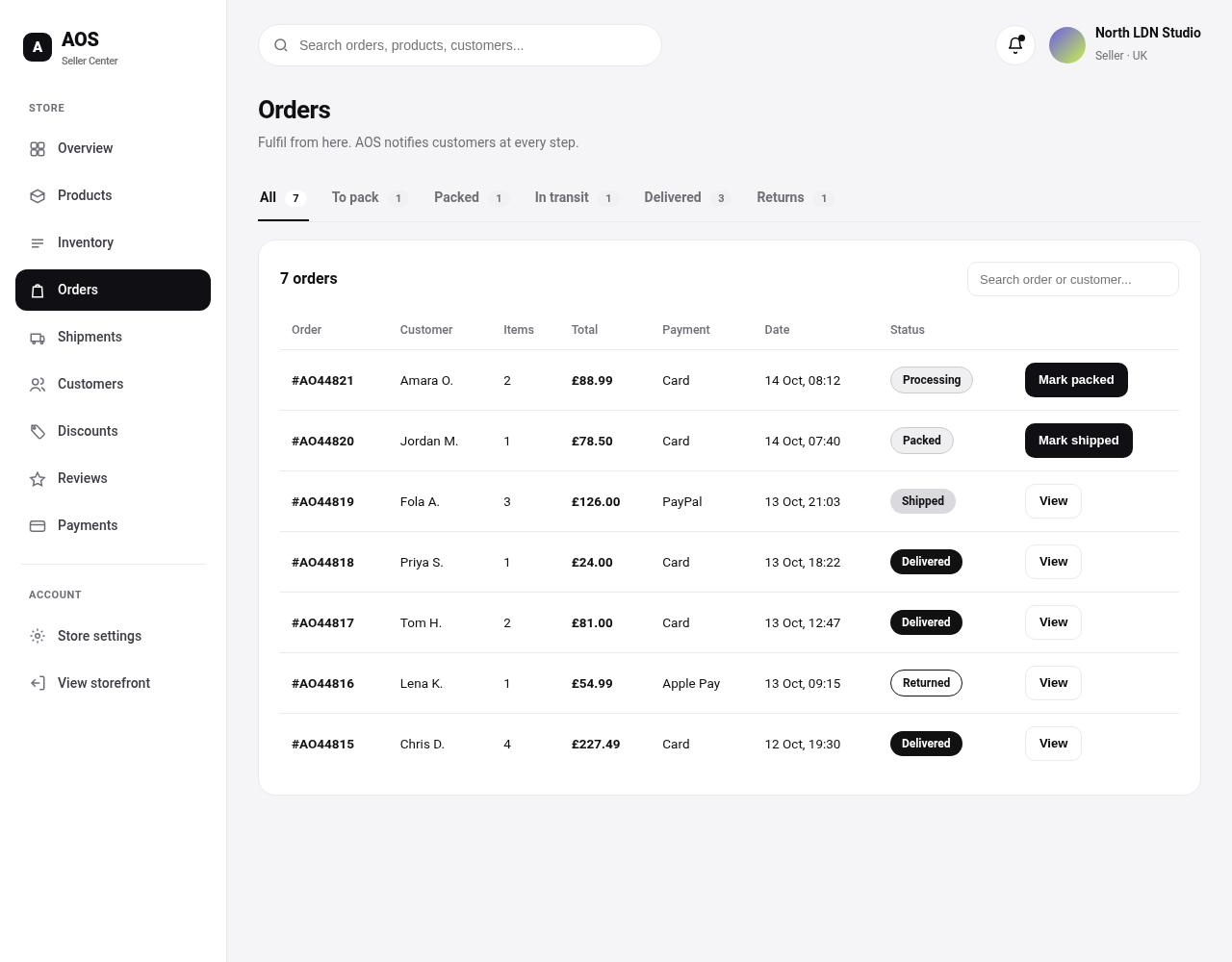
Every order moves processing, packed, shipped, delivered, with a returns state, and the action button always names the next step.
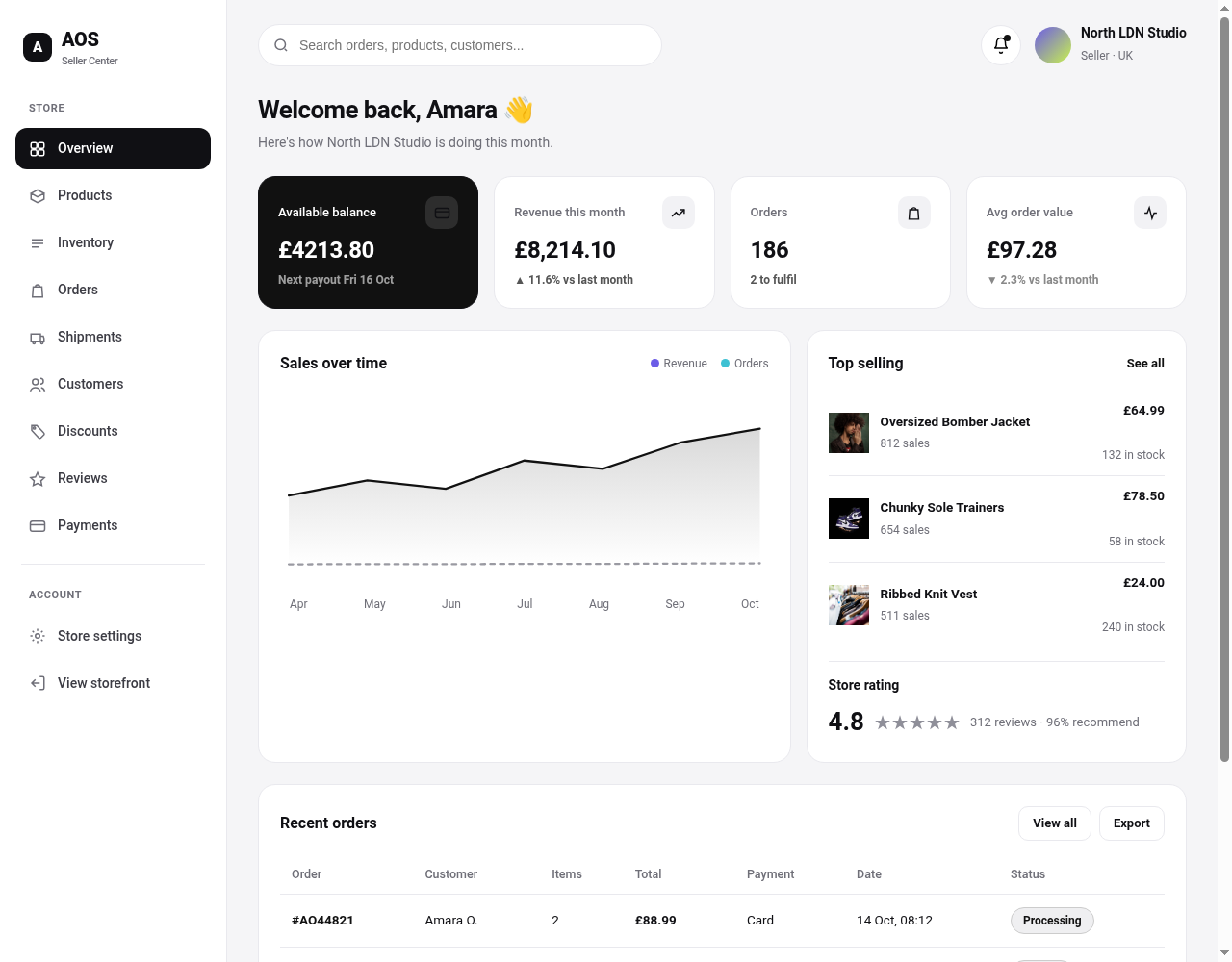
Available balance, in-transit funds and the next payout date sit on the overview, with a transactions ledger and a withdraw action behind them.
Buyer reviews with a public reply flow and promo codes with pause and delete, not afterthoughts bolted on at the end.
Sellers check their store between jobs, so every screen reflows for mobile rather than pinch and zoom.
The storefront mirrors the structure buyers expect on a fashion marketplace: utility bar, Women and Men split, category navigation, a hero, category tiles, a new-in grid, campaign banners and a sale band.
The seller centre covers the full run of a small merchant: overview, products with upload, edit and delete, inventory with restock and CSV export, orders with a status flow and order detail, shipments with carrier tracking, customers, discounts, reviews and payments with withdrawals.
This is a concept on sample data, so these are the numbers I would watch if it shipped:
I have built marketplace supply before at Jumia, and the lesson held here: the seller experience is not admin tooling, it is the product. Every screen was judged on whether a busy merchant would still understand it at the end of a long day.